
7 Common Causes of Hip Pain at Night

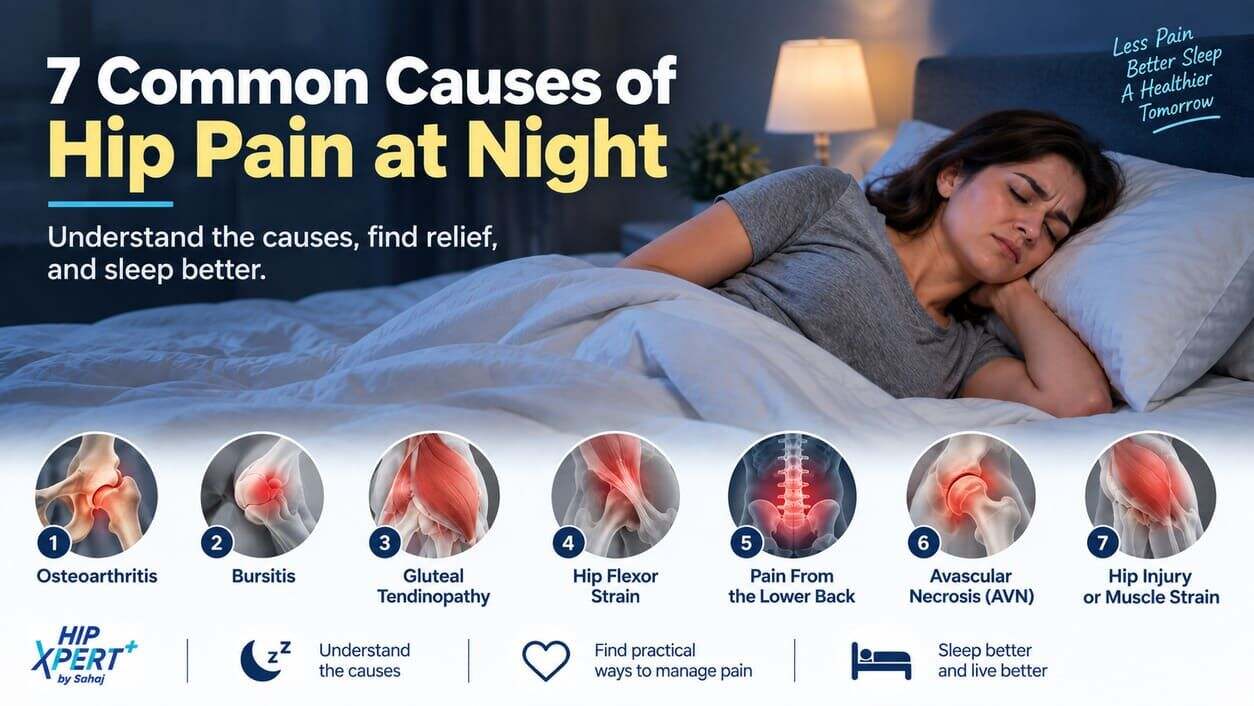
Causes of Hip Pain at Night
Hip pain at night can make it difficult to fall asleep or stay asleep. You may feel pain when lying on one side, turning in bed, or staying in the same position for a long time.
The pain can come from the hip joint, the muscles and tendons around it, or even the lower back. Knowing where the pain starts and what makes it worse can provide useful clues.
The Arthritis Foundation reports that more than one-third of U.S. adults say hip, knee, or foot pain wakes them at night.
Why Does Hip Pain Get Worse at Night?
Night-time hip pain can become more noticeable for several reasons.
During the day, movement and daily activities can take your attention away from the pain. At night, staying still for several hours may increase stiffness.
Your sleeping position can also make a difference. Sleeping on your side puts direct pressure on the hip and may make some irritated tissues more painful.
1. Osteoarthritis
Osteoarthritis (OA) is a common cause of hip pain. It can cause pain in the groin, thigh, or buttocks and may be worse in the morning or after sitting for a long time.
Although OA is more common in older adults, it is not an unavoidable part of ageing and can affect adults at different ages.
Regular physical activity can help improve mobility and manage symptoms. The Arthritis Foundation also notes that acupuncture and massage may help some people.
The reference notes that the American College of Rheumatology (ACR) recommends a topical nonsteroidal anti-inflammatory drug (NSAID) as a first treatment for OA. For night-time symptoms, applying it before bed may be useful. The source also advises extra caution with oral NSAIDs such as ibuprofen and naproxen in people over 65 because of their potential risks.
2. Bursitis and Outer Hip Pain
Bursitis can cause pain around the outer part of the hip. A common sign is pain when you lie on the affected side.
A bursa is a small fluid-filled sac that helps reduce friction between tissues. When it becomes irritated, pressure from sleeping on that side can make the pain worse.
Bursitis may be linked to overuse, a hip injury, arthritis, previous hip surgery, or a hip implant.
Changing your sleeping position and avoiding direct pressure on the painful side may help reduce irritation.
3. Gluteal Tendinopathy
Gluteal tendinopathy affects the tendons around the buttocks and outer hip.
It can develop because of overuse, repeated stress, or weak muscles. Pain may become more noticeable after activity and can also be present while resting.
Pain is often felt around the outside of the hip. Since several problems can cause pain in this area, a proper assessment can help identify the cause.
4. Hip Flexor Strain
The hip flexors are muscles that help you move your hip. Overuse or overstretching can cause a hip flexor strain.
Symptoms may include pain, swelling, weakness, and reduced movement.
This type of pain may occur after exercise or activities that put repeated stress on the hip.
Resting from activities that increase the pain can give the muscles time to recover. If symptoms continue or become worse, they should be assessed.
5. Pain Coming From the Lower Back
Sometimes pain that feels like hip pain does not actually start in the hip.
Problems in the lower back or irritation of nearby nerves can cause pain in the buttock, hip, or leg. Nerve-related pain may also feel sharp, burning, or tingling.
Pain location can provide a useful clue. Deep groin pain may be related to the hip joint, while pain in the buttock or lower back may be related to the back or nerves.
6. Avascular Necrosis (AVN) of the Hip
Avascular necrosis (AVN), also called osteonecrosis, happens when the blood supply to part of a bone is reduced. Over time, this can damage the bone and may cause the hip joint to collapse.
AVN commonly affects the hip and can cause pain in the groin, thigh, or buttock. In the early stages, pain may mainly occur while putting weight on the leg. As the condition progresses, pain can also occur when you are resting or lying down.
AVN can affect people of different ages, but it is most common between 30 and 50 years of age. Long-term use of high-dose steroid medicines, heavy alcohol use, and certain injuries or medical conditions can increase the risk.
Persistent or unexplained hip pain should be evaluated because AVN can have symptoms similar to other hip conditions.
7. Hip Injury or Muscle Strain
An injury can cause pain in the hip and surrounding tissues. Muscle strains may occur after a sudden injury or from repeated overuse. They can affect the hip flexors and other muscles around the hip and thigh.
Symptoms may include pain, swelling, weakness, reduced movement, and difficulty walking. Using the injured muscle can make the pain worse.
If the pain started after a fall, sports injury, or sudden movement, especially when you cannot put weight on the leg, a medical assessment is important.
What Can Help With Hip Pain at Night?
A few simple changes may make sleeping more comfortable.
Try sleeping on your back. If you sleep on your side, placing a pillow between your knees may reduce pressure on the hip. Avoid sleeping directly on the painful side when possible.
Gentle movement during the day may help prevent stiffness. Depending on the cause, heat or ice may provide temporary relief.
For minor hip pain, limiting activities that increase the pain and avoiding prolonged direct pressure on the hip can also help.
When Should You See a Doctor?
You should get your hip pain checked if:
- It keeps waking you at night
- It is not getting better
- It lasts for several weeks
- You have stiffness or reduced movement
- You are finding it difficult to walk
- Redness or swelling continues
More urgent medical attention may be needed if you have fever, unexplained weight loss, inability to bear weight, or severe pain after an injury.
After an injury, immediate medical care is particularly important if the hip looks deformed, you cannot move the leg, or you cannot put weight on it.
How Is Hip Pain Diagnosed?
A doctor may ask when the pain started, where you feel it, what makes it worse, and whether it affects your sleep or daily movement.
The hip, surrounding tissues, and lower back may be examined to find the source of the pain. When needed, tests such as an X-ray, CT scan, or MRI may help confirm the cause.
Final Thoughts
Hip pain at night can have different causes. These include osteoarthritis, bursitis, gluteal tendinopathy, hip flexor strain, pain referred from the lower back or nerves, avascular necrosis, and hip injury or muscle strain.
The location of the pain, your age, activity level, other symptoms, and what makes the pain worse can all provide useful clues. When night-time hip pain keeps disturbing your sleep or affects your movement, finding the actual cause is important.