
Can Hip AVN Cause Knee Pain? Symptoms & Treatment

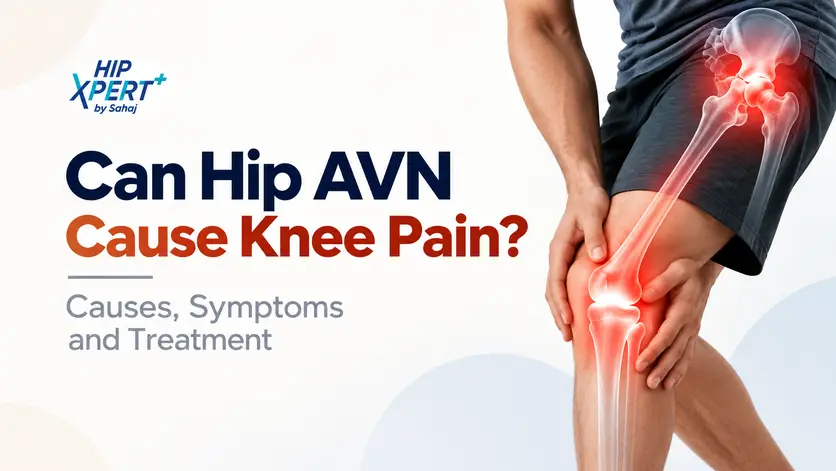
Yes. Hip avascular necrosis (AVN) can cause knee pain, even when the knee itself is normal. This is called referred pain.
However, knee pain can also result from a separate knee condition, so identifying the underlying cause is important.
How does hip AVN cause knee pain?
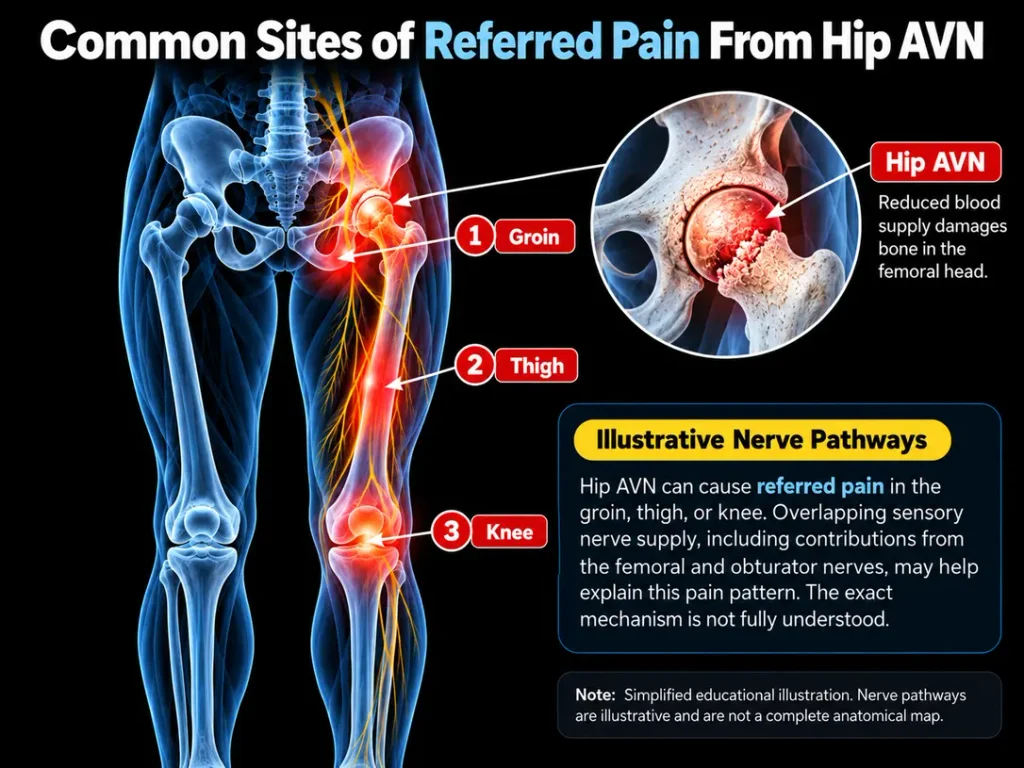
The hip and knee share some of the same sensory nerve pathways. When the hip joint is damaged by AVN (loss of blood supply to the bone), the brain can sometimes interpret pain signals from the hip as coming from the knee.
Common features include:
- Knee pain without an obvious knee problem on examination or imaging.
- Pain in the groin, thigh, or knee on the same side.
- Pain that worsens with walking, standing, or putting weight on the affected leg.
- Limping or reduced hip movement.
- Knee pain that persists despite treatment directed at the knee.
Knee pain may occasionally be the main symptom, so hip AVN can be overlooked if only the knee is investigated.
What Does Knee Pain From Hip AVN Feel Like?
Knee pain associated with hip AVN can vary from person to person. Some people experience pain around the knee, while others feel discomfort extending from the hip or groin through the thigh.
Common symptoms may include:
- Pain around the knee: Discomfort may be felt in or around the knee, even when the underlying problem originates in the hip.
- Pain extending down the thigh: Pain may spread from the hip or groin toward the knee. In some cases, knee pain may be more noticeable than hip pain.
- Pain during walking or standing: Weight-bearing activities may worsen discomfort, particularly as AVN progresses.
- Difficulty walking or reduced hip movement: Hip stiffness and pain may affect normal walking and daily activities.
These symptoms are not specific to AVN and can occur with other hip or knee conditions. A clinical examination and appropriate imaging can help determine the source of the pain.
How Is Hip AVN-Related Knee Pain Treated?
Treatments are done according to the stage of hip AVN:
1. Early AVN — before bone collapse
- Reduce painful weight-bearing; crutches may help.
- Use appropriate pain relief under medical guidance.
- An orthopaedic specialist may consider joint-preserving treatments, such as SVF therapy and other selected regenerative or bone-preserving approaches, depending on the stage of AVN and the extent of bone damage.
- MRI helps assess the extent of bone damage.
2. AVN with a fracture or early collapse
The bone beneath the joint surface may be cracking or deforming. Treatment depends on the extent of collapse, symptoms and age. Some joint-preserving procedures may still be considered in selected cases.
3. Advanced AVN — significant collapse or arthritis
Total hip replacement is the most reliable treatment when the femoral head has significantly collapsed and pain or disability is severe. It treats the hip disease that is causing the referred knee pain.
The American Academy of Orthopaedic Surgeons (AAOS) provides further information about hip osteonecrosis, including its symptoms, progression, and treatment options.
Frequently Asked Questions
Yes, hip AVN can cause referred pain that is felt in the knee. However, severe knee pain can also result from other conditions and should be medically evaluated.
Knee pain can be the first noticeable symptom in some cases, although it is not a reliable indicator of AVN on its own. Persistent, unexplained knee pain may warrant an assessment of the hip.
Pain location alone cannot reliably identify the source. Groin pain, restricted hip movement, and difficulty walking may suggest a hip problem, but clinical examination and appropriate imaging are needed to determine the cause.
If knee pain originates from the hip, treating the underlying condition may improve the symptoms. The outcome depends on the cause, disease stage, and response to treatment. Knee pain caused by a separate knee condition may require different treatment.