
Why Is a Hip Fracture So Dangerous? Risks & Complications

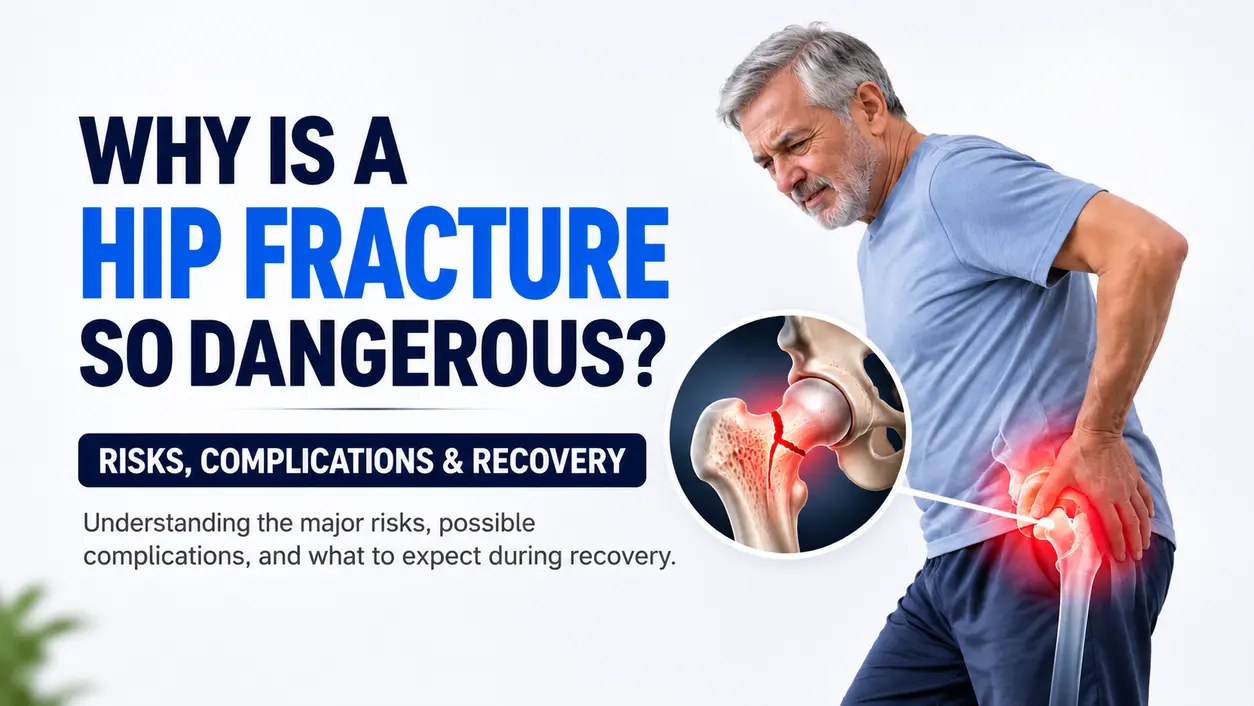
A hip fracture is more than a broken bone. It can make walking difficult, limit daily activities, and lead to serious health problems, especially in older adults.
The main danger is that a hip fracture can prevent normal movement. This may increase the risk of blood clots, chest infections, and muscle weakness. Early treatment is important to reduce complications and help patients recover.
Why Is a Hip Fracture So Dangerous?
A hip fracture is a break in the upper part of the thigh bone (femur), near the hip joint. It often happens after a fall and is more common in older adults with osteoporosis.
A hip fracture can be dangerous for five main reasons.
1. It Can Limit Movement
A hip fracture can cause severe pain and make it difficult to stand or walk.
When a person cannot move normally, their muscles become weaker. They may also need help with everyday activities such as bathing, dressing, and getting out of bed.
2. It Can Cause Blood Clots
Staying in bed for long periods can increase the risk of blood clots in the legs. This condition is called deep vein thrombosis (DVT).
If a clot travels to the lungs, it can cause a life-threatening condition called pulmonary embolism. Doctors may recommend medicines and other preventive measures to reduce this risk.
3. It Can Lead to Pneumonia and Pressure Sores
Prolonged bed rest can increase the risk of pneumonia and other complications.
Pressure sores can also develop when a person stays in the same position for too long. Older adults who need help moving are particularly vulnerable.
Good nursing care, regular position changes, and movement when medically safe can help reduce these risks.
4. Surgery Can Carry Additional Risks
Many hip fractures require surgery to repair the broken bone or replace part of the hip joint.
Possible complications include infection, bleeding, blood clots, and confusion after surgery. The risks may be higher in people with existing conditions such as heart disease, diabetes, or lung disease.
Doctors assess the patient’s overall health before deciding on the most suitable treatment.
5. Recovery Can Affect Independence
Recovery from a hip fracture can take several weeks or months.
Some patients regain their previous mobility, while others need a walker, physiotherapy, or long-term assistance with daily activities.
Age, general health, fracture severity, and rehabilitation all influence recovery.
Can a Hip Fracture Be Life-Threatening?
Yes. A hip fracture can be life-threatening, particularly in frail older adults or people with other medical conditions.
Serious complications may include blood clots, pneumonia, infections, and problems related to surgery or prolonged immobility.
According to the NICE hip fracture management guideline, timely surgery, appropriate medical care, and rehabilitation are important parts of hip fracture management.
However, the outcome varies from person to person. Prompt treatment and appropriate rehabilitation can help reduce complications and improve recovery.
What Are the Warning Signs of a Hip Fracture?
Common symptoms include:
- Severe pain in the hip, groin, or upper thigh after a fall.
- Difficulty standing or putting weight on the affected leg.
- Swelling or bruising around the hip.
- Difficulty moving the affected leg.
- The injured leg appeared shorter or turned outward.
What should you do?
If you suspect a hip fracture, seek emergency medical care immediately. Do not force the person to stand or walk. Keep them comfortable and avoid unnecessary movement while waiting for medical assistance.
How Is a Hip Fracture Treated?
Treatment depends on the type of fracture, its severity, and the patient’s overall health.
Doctors usually use an X-ray to confirm the fracture. Surgery is commonly needed and may involve:
- Fracture fixation: Screws, plates, or rods hold the broken bone in place.
- Partial hip replacement: The damaged part of the joint is replaced.
- Total hip replacement: Both the ball and socket are replaced with artificial components.
After treatment, pain management and physiotherapy help patients regain strength and mobility. Doctors also take steps to prevent complications and support recovery.
How Can You Reduce the Risk of a Hip Fracture?
Although not every hip fracture can be prevented, these steps can help reduce the risk:
- Remove loose rugs and other tripping hazards at home.
- Improve lighting and install bathroom grab bars.
- Practise suitable strength and balance exercises.
- Ask your doctor about osteoporosis screening and bone health.
- Maintain a balanced diet with adequate calcium, vitamin D, and protein.
- Review medicines that may cause dizziness or increase fall risk.
Conclusion
A hip fracture can be dangerous because it affects more than the bone. It can limit movement, increase the risk of serious complications, and reduce independence.
Early medical treatment, supervised rehabilitation, and fall prevention can help reduce these risks and improve recovery.
Frequently Asked Questions
Older adults are more likely to have weak bones, reduced muscle strength, and other medical conditions. These factors can increase the risk of complications and make recovery more difficult.
Some people may still be able to walk with certain fractures. However, being able to walk does not rule out a fracture. Medical assessment is important after a suspected hip injury.
An untreated hip fracture can cause ongoing pain, prevent normal movement, and increase the risk of serious complications. It requires urgent medical assessment.
Recovery often takes several weeks to months, depending on the injury, treatment, and general health. Some patients need longer rehabilitation or assistance with daily activities.