
Stages of Avascular Necrosis

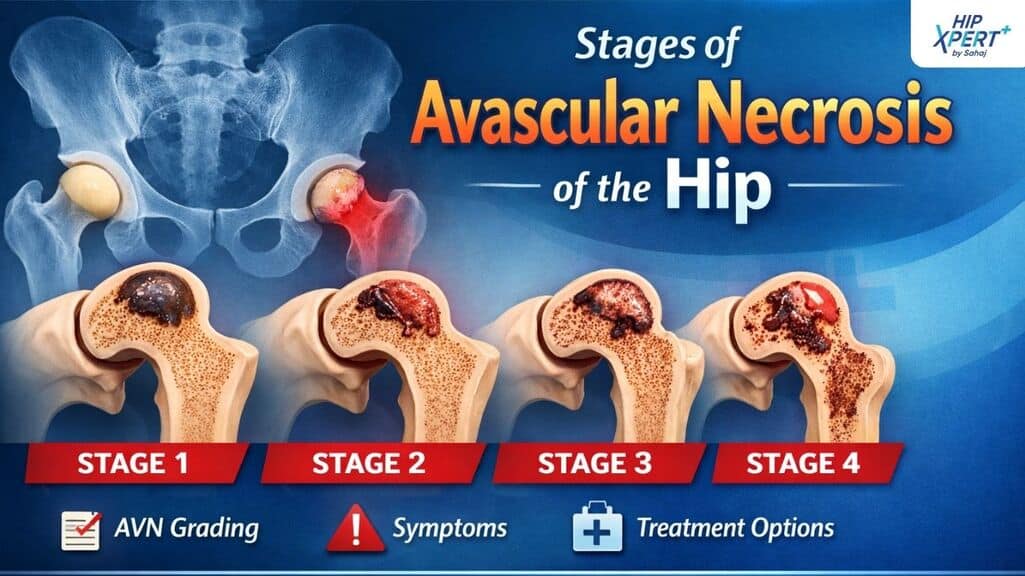
Avascular Necrosis (AVN) is a condition where the blood supply to a bone is reduced, leading to bone damage and possible joint collapse over time.
It most commonly affects the hip joint, which makes understanding the stages of AVN hip and proper AVN grading essential for early diagnosis and treatment.
Stages of AVN
AVN progresses gradually, and each stage represents a different level of bone damage. Understanding these stages of AVN is essential for selecting the right treatment approach.
Stage 0–1 (Early Stage)
Key Features:
- Reduced blood supply to the bone
- Bone structure remains intact.
- X-rays usually normal, MRI detects early changes
Symptoms:
- Mild or no pain
- Discomfort during activity
Stage 2 (Pre-Collapse Stage)
Key Features:
- Bone damage visible on X-ray
- No collapse of bone
Symptoms:
- Pain during walking or activity
- Relief with rest
Stage 3 (Collapse Stage)
Key Features:
- Bone collapse begins
- Joint surface becomes irregular
Symptoms:
- Persistent pain
- Limping and stiffness
Stage 4 (Advanced Stage)
Key Features:
- Complete bone collapse
- Joint damage and arthritis
Symptoms:
- Severe constant pain
- Restricted movement
Symptoms vs Stages of AVN
Understanding symptom progression helps in early diagnosis of AVN stages.
| AVN Stage | Pain Level | When Pain Occurs | Mobility Impact | Other Symptoms |
| Stage 0–1 | Mild or none | During activity or absent | No limitation | Often unnoticed |
| Stage 2 | Mild to moderate | During walking | Slight restriction | Early stiffness |
| Stage 3 | Moderate to severe | Even at rest | Difficulty walking | Limping, stiffness |
| Stage 4 | Severe | Constant | Major restriction | Arthritis, joint damage |
Stage-wise Treatment of AVN
Treatment depends directly on AVN grading and stage of disease.
| AVN Stage | Condition of Bone | Treatment Goal | Recommended Treatments |
| Stage 0–1 | Normal structure | Restore blood supply | Medications, Physiotherapy, Regenerative therapies, Core decompression |
| Stage 2 | Bone damage visible | Prevent collapse | Core decompression, Regenerative therapies, Bone grafting |
| Stage 3 | Collapse begins | Preserve function | Bone grafting, Advanced procedures |
| Stage 4 | Joint damage | Restore mobility | Hip replacement surgery |
Final Takeaway
AVN is a progressive condition, but early detection can make a significant difference. Understanding the stages of AVN, along with proper AVN grading, helps in choosing the right treatment at the right time.
Early-stage AVN offers the best chance to preserve the joint, while advanced stages may require surgical solutions. Recognizing symptoms early and seeking timely medical advice can help prevent long-term complications.
Frequently Asked Questions (FAQs):
Avascular necrosis is typically divided into four main stages, ranging from early bone damage (Stage 0–1) to complete bone collapse and joint damage (Stage 4). These stages help determine the severity of the condition and guide treatment decisions.
AVN grading refers to the classification of the disease based on its progression. It helps doctors assess how much bone damage has occurred and choose the most appropriate treatment, from conservative care in early stages to surgery in advanced stages.
Yes, AVN can often be treated without surgery in its early stages (Stage 0–2). Treatments may include medications, physiotherapy, and regenerative therapies like stem cell therapy or PRP. Early diagnosis plays a key role in avoiding surgery.
In early stages, AVN may cause mild or no pain. As the condition progresses, pain becomes more frequent and may occur even at rest. In advanced stages, patients may experience severe pain, stiffness, and difficulty in movement.
Surgery is usually required in advanced stages (Stage 3–4) when the bone has collapsed and the joint is damaged. Procedures like hip replacement are performed to relieve pain and restore mobility.